
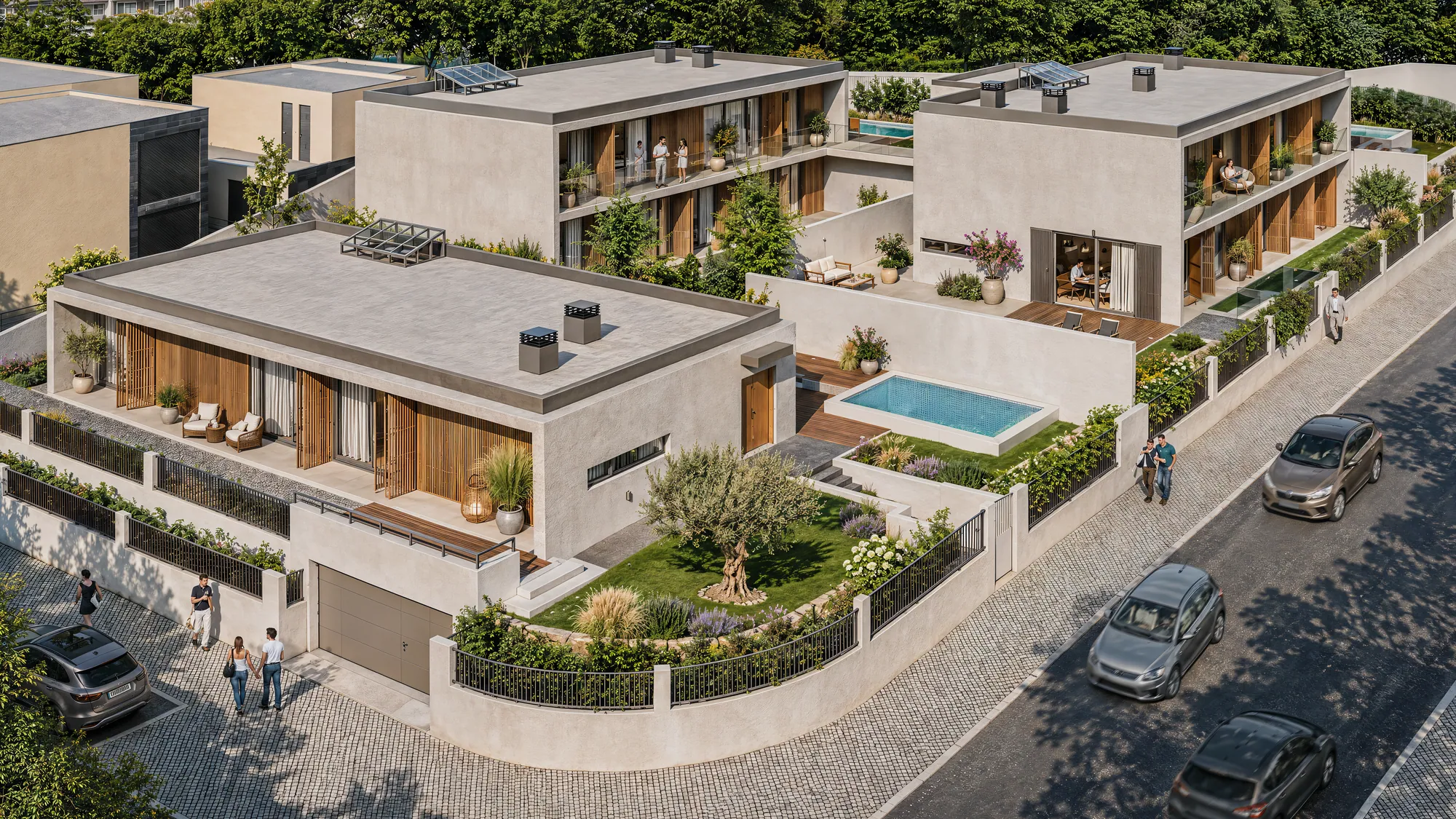
Selling a property project before construction begins is no longer just for the “big players”. Discover the step-by-step strategy that lets you validate the market, reduce risk and speed up your return, turning your project from a risk into something concrete and profitable.
For a long time, selling a property project before building it seemed to be reserved for big developers. Today, that has changed. More and more architects, investors and builders are realising something simple:
👉 waiting for construction before you start selling is an unnecessary risk.
A real estate pre-sale is not just a commercial strategy. It is a way to validate the project, reduce risk and speed up the return on investment. But to work, it needs structure.
Why do most pre-sales fail?
Before talking about the process, it is important to understand where many go wrong. I often see projects that try to sell before building… but without preparation.
-
unclear images
-
no narrative
-
no communication strategy
-
prices set without validation
The result?
👉 the market does not react
👉 the developer loses confidence
👉 and the pre-sale is abandoned
Not because the idea was wrong. But because the execution was weak.
Step 1: define the right product
Before you sell, you need to know exactly what you are selling. And that goes far beyond saying: “Modern two-bedroom flat with good finishes.”
Essential questions:
-
Who is the ideal buyer?
-
Does this layout meet their needs?
-
Does the project stand out in the market?
-
What problem does it solve for the person buying?
So, a pre-sale starts with product clarity.
There is one mistake that sometimes happens here and needs to be avoided:
👉 designing for personal taste instead of designing for the market
Step 2: make the project easy to understand
The biggest obstacle in a pre-sale is simple:
👉 people cannot imagine what does not exist yet.
Plans and technical drawings are not enough. This is where a critical piece comes in:
👉 clear, realistic visualisation of the project
Not just to “look nice”, but to:
-
explain the space
-
convey scale and light
-
help the client feel the atmosphere
-
reduce doubts
When the client can visualise it, the decision speeds up.
Step 3: build a sales narrative
A project is not sold with images alone. It is sold with a story. The key question:
👉 Why would someone want to buy this?
Examples:
-
a location with potential
-
an open-plan concept
-
a focus on natural light
-
an ideal investment solution
The narrative should connect:
👉 project + lifestyle + opportunity
Without it, the project is just “one more on the market”.
Step 4: define the launch strategy
A pre-sale does not happen by chance. It needs a plan. Some important decisions:
-
Where will you present the project?
-
Will you use social media, property portals or your network of contacts?
-
Is there an exclusive phase for early interest?
-
How will you create urgency?
An important point comes in here:
👉 it is not enough to put it online and wait; you need to create intent.
Step 5: test the market (before scaling up)
One of the biggest benefits of a pre-sale is the chance to test. Before going full steam ahead, observe:
-
which unit types generate most interest
-
which prices get the best response
-
which questions come up most often
This feedback is valuable. Because it lets you adjust:
👉 before investing in construction
Step 6: adjust the project based on data
This is one of the biggest competitive advantages. When you have real feedback from the market, you can:
-
improve layouts
-
adjust materials
-
reposition the product
-
optimise the price
This avoids a classic mistake:
👉 building something nobody asked for
Step 7: close before you build (whenever possible)
The goal of a pre-sale is not just to generate interest. It is to close the deal. Even if you do not sell everything, securing:
-
reservations
-
deposits
-
purchase commitments
already changes the game completely, because you go into construction with:
👉 more security
👉 less risk
👉 greater financial control
The role of 3D visualisation in this process
Throughout all these steps, there is one element that ties everything together:
👉 the ability to show the project clearly
3D visualisation is not just an aesthetic tool. It is a tool for:
-
communication
-
decision-making
-
confidence
-
sales
It turns something abstract into something real. And that makes all the difference when you are selling something that does not exist yet.
A real estate pre-sale is a competitive advantage
Selling before you build is not just for big developers. It is a strategy open to any professional who wants to:
-
reduce risk
-
validate decisions
-
speed up sales
-
increase margin
But like any strategy, it depends on how it is executed. Without structure, it fails. With structure, it becomes one of the most powerful tools in real estate.
👉 Because in the end, it is not just about selling earlier. It is about making better decisions before you invest.